Solid gold. Never plated, never filled.
Plated gold is a whisper of gold sprayed over a cheaper metal. Gold-filled is a slightly thicker layer bonded on top. Both wear through — at the knuckle first, where a ring is handled most — and once they do, the base metal shows, greys, and can mark the skin. There is no repairing it, because there was never much gold to begin with.
Solid gold is different all the way to its centre. It can't wear off, because it isn't a coating — it's the whole ring. That is why a solid band can be sized when fingers change, re-polished when life leaves its marks, restored after decades, and one day worn by someone you haven't met yet. You aren't buying a finish. You're buying the metal.
- Gold-platedA microns-thin layer over brass or silver. Wears through at the knuckle; can't be restored.
- Gold-filledA thicker, bonded layer — better, but still a layer. Eventually wears down to the base metal.
- Solid gold — oursReal gold through and through. Resize it, re-polish it, hand it down; nothing wears off.
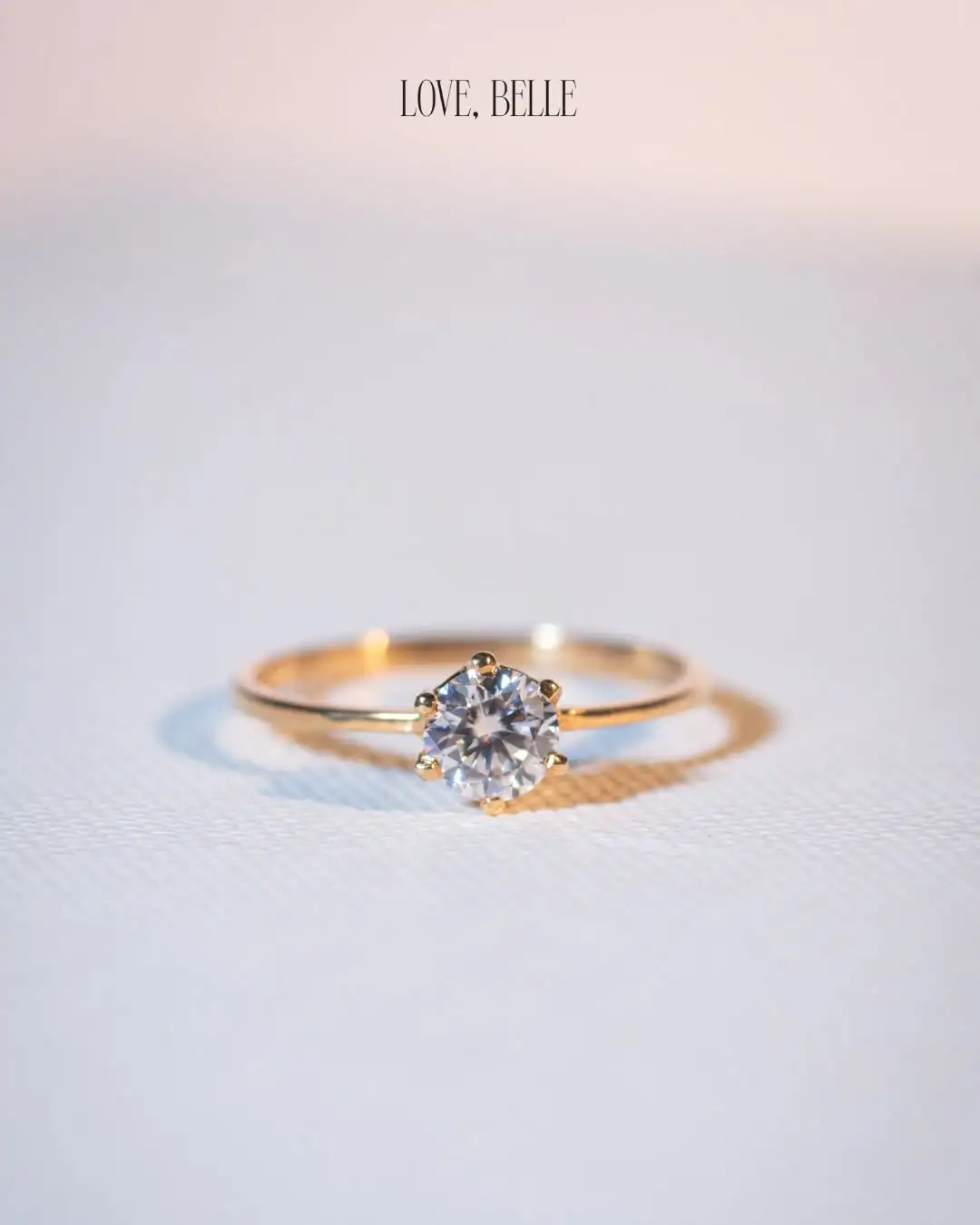
14k or 18k — both genuinely gold.
The number is the recipe. Pure 24k gold is too soft to hold a stone or survive daily wear, so it's alloyed with harder metals for strength. 14k is 58.5% gold; 18k is 75%. 18k is a touch richer and warmer in colour and a little more precious. 14k is slightly harder underfoot and gentler on the budget — the practical choice for hands that don't come off for anything. Neither is fake and neither is 'better.' They are two honest answers to the same question, and we'll help you land on the one that suits your finger and your budget.
- Gold content14k — 58.5% · 18k — 75%
- Colour14k — bright warm yellow · 18k — deeper, richer yellow
- Everyday hardness14k — a little harder, holds up · 18k — softer, more precious
- On the budget14k — more accessible · 18k — a step up
- Best for14k — hands-on daily wear · 18k — the richest gold possible
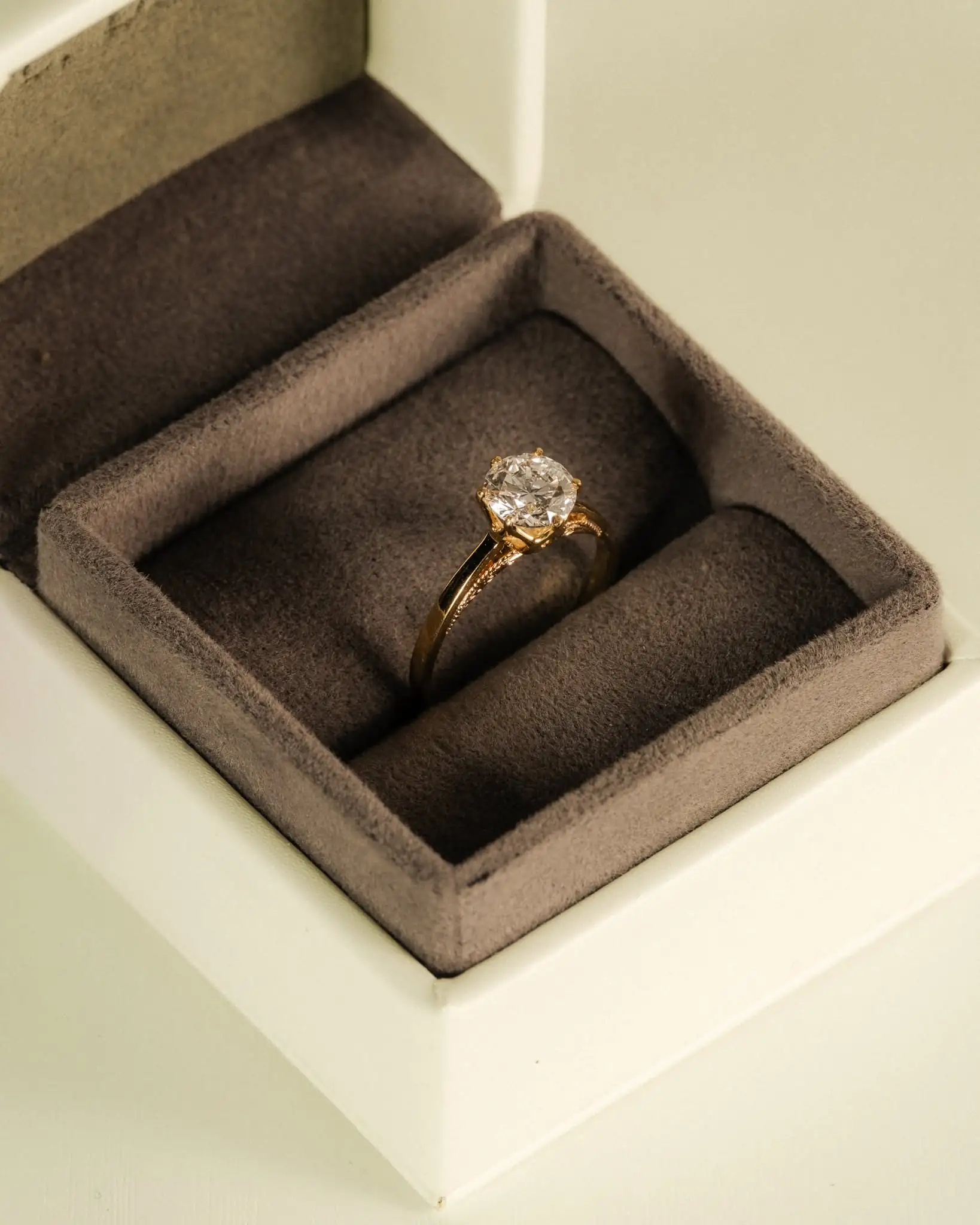
Yellow, white, and rose.
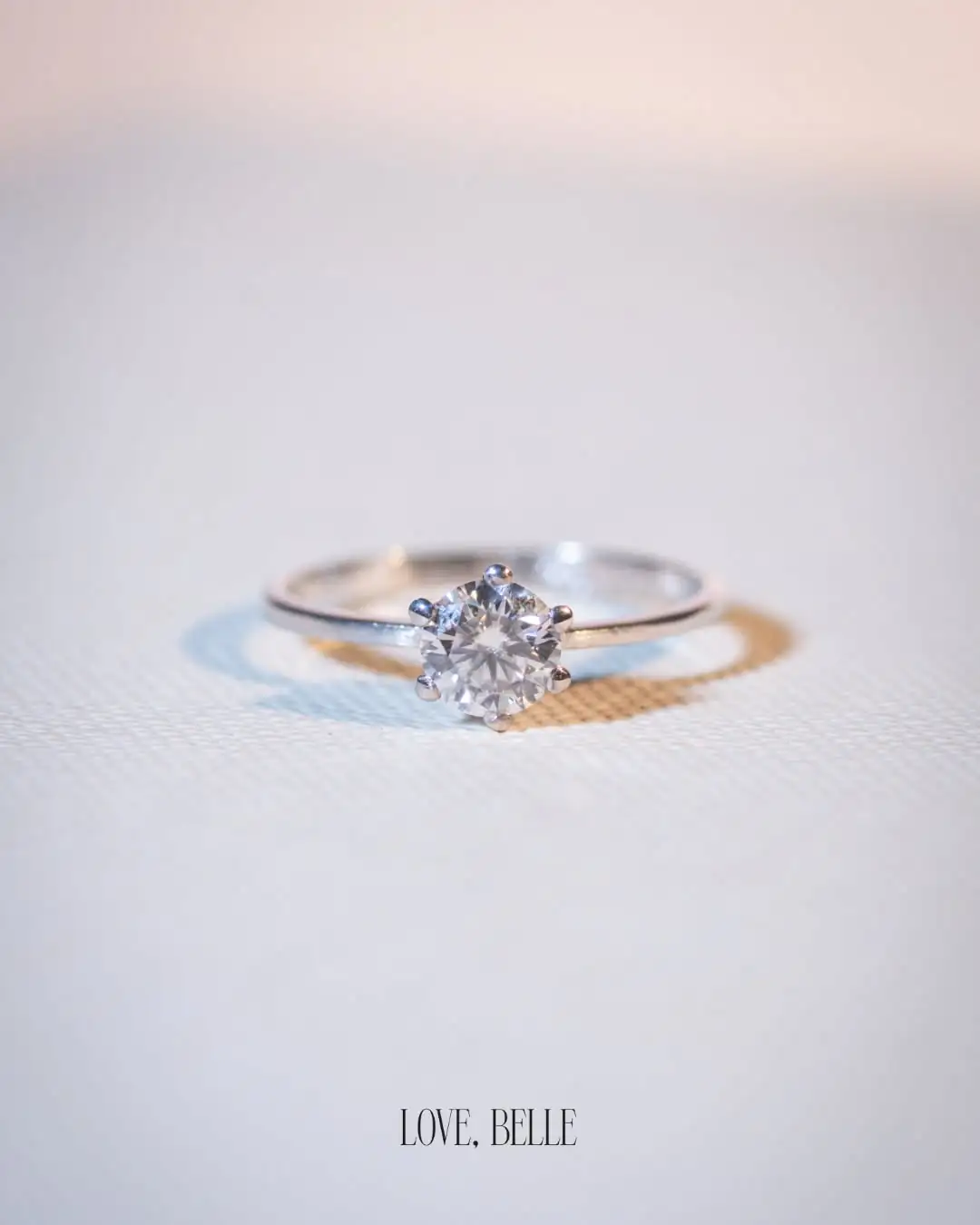
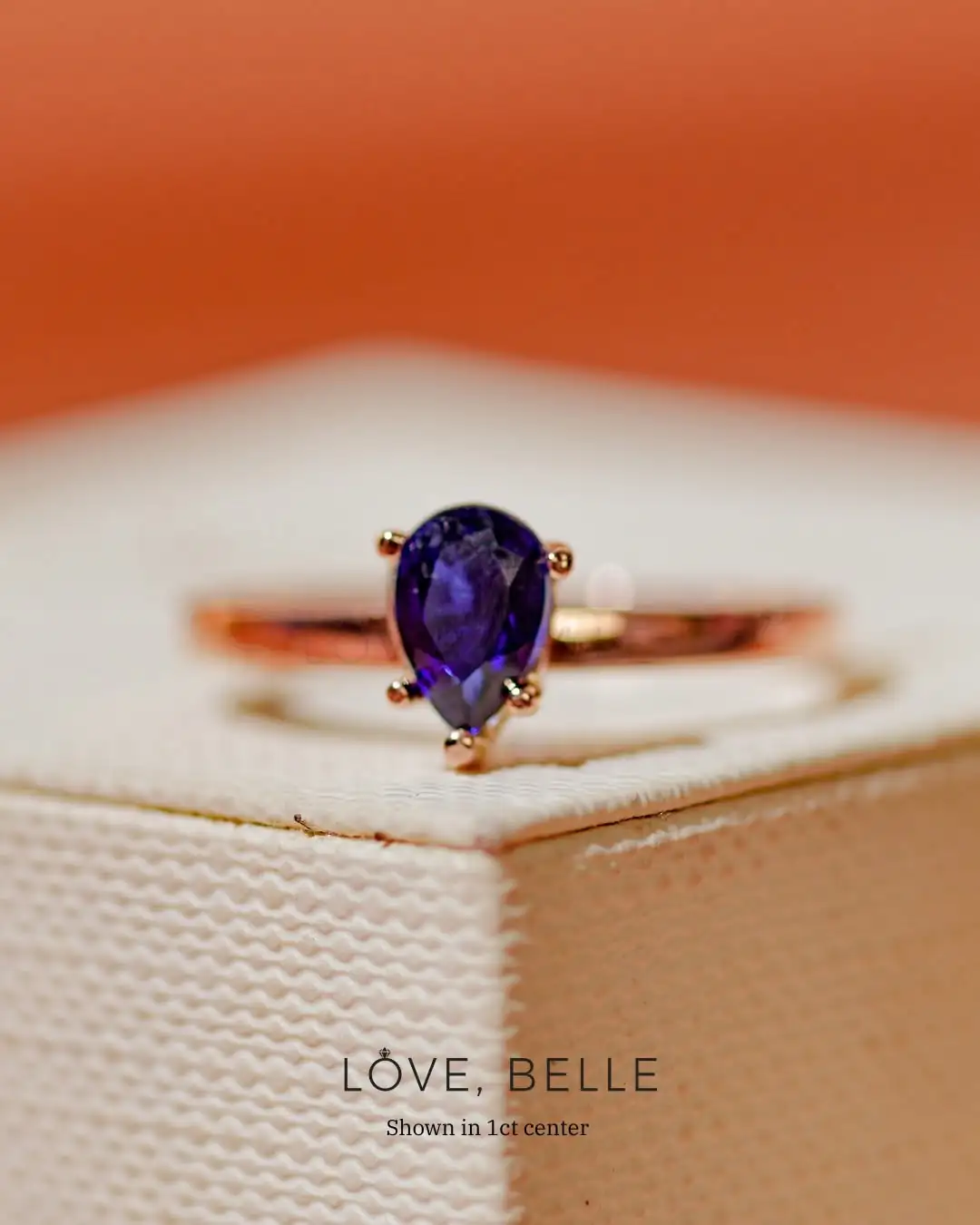
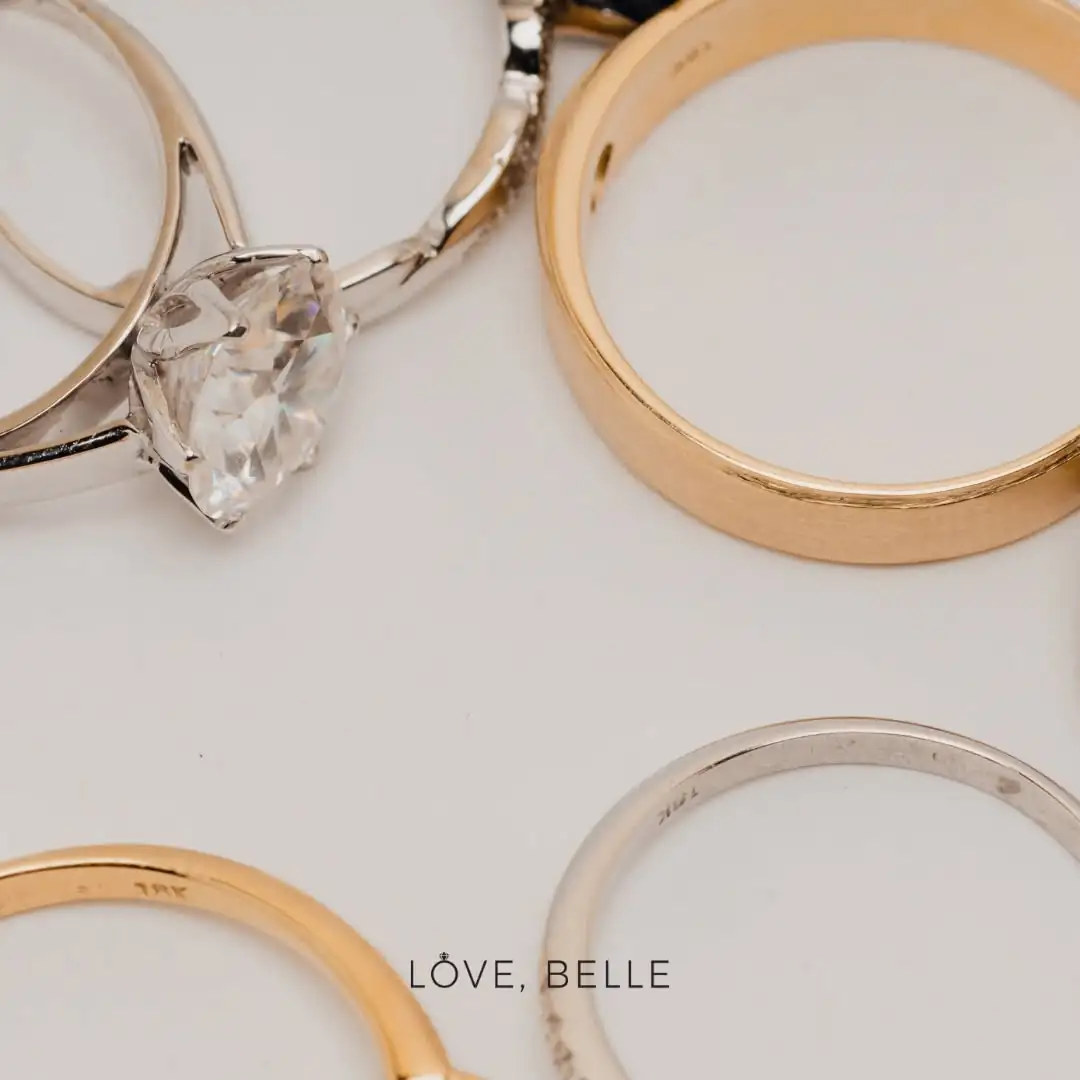
Yellow gold is our signature — the truest gold colour, the tone Love, Belle is known for, and one that flatters warm skin beautifully. But all three colours begin as the same real gold; the shade comes from what it's alloyed with. White gold is blended with pale metals and finished in rhodium for that cool, bright shine — a surface plating that can be freshened over the years, so it never dulls for good. Rose gold takes its blush from copper, and only deepens with age. Whichever tone you choose, the gold beneath it is genuine.
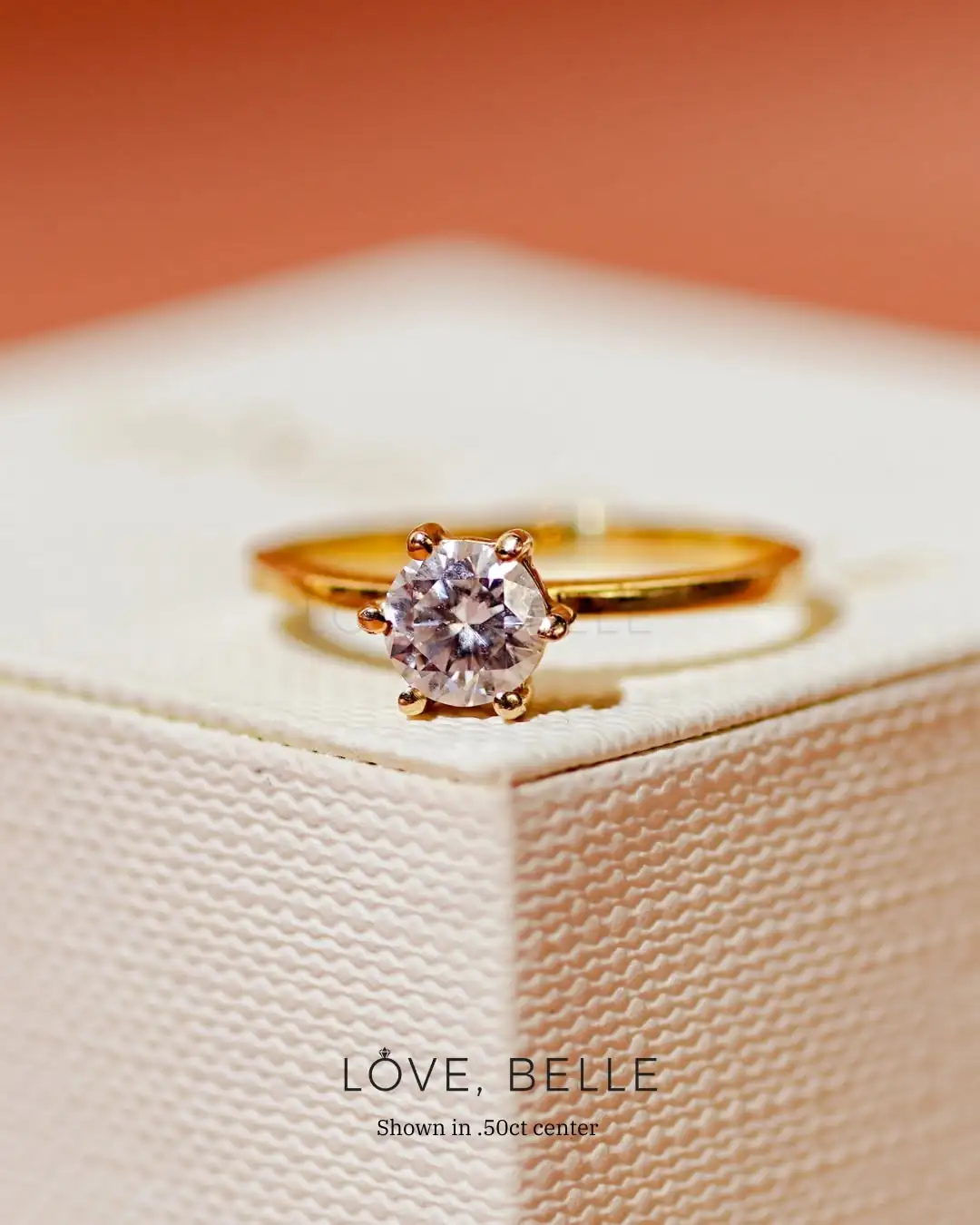
Finished by hand.
A ring is cast, but it's made by hand. Once the metal comes out of the mould, every Love, Belle ring passes across a jeweller's bench, one at a time. This is the part that can't be rushed or automated — it's why no two rings from the same design are ever quite identical, and why the finish reads the way it does in the light.
- 01 — Cast & cleanedThe raw gold form is cut from its sprue and cleaned up.
- 02 — Filed & shapedThe band is filed true and the inside rounded to a comfort fit.
- 03 — Set by handEach prong is bent and burnished over the stone, individually.
- 04 — Hand-polishedProgressive polishing brings the mirror finish; white gold is rhodium-plated last.
Care, keeping, and the honest questions.
The things people ask us most about gold — answered straight, so you know exactly what you're wearing and how to look after it.
Will solid gold tarnish?
No — genuine gold doesn't rust or tarnish. It can pick up a dull film from lotion, soap, and sunscreen; a soak in warm water with a drop of dish soap and a soft brush brings the shine right back.
How do I keep it looking new?
Take it off for the gym, cleaning, and the beach, keep it clear of bleach and chlorine, and store it soft and separate so stones don't scratch. Bring it to us once a year and we'll clean it, check the prongs, and re-polish it — free, for as long as you own it.
My white gold looks less bright — is it faulty?
No. That's the rhodium finish mellowing, which is completely normal. A quick re-plate makes it bright-white again; most people do it every two to three years.
Can it be resized later?
Yes. Solid gold can be sized up or down — usually one to two sizes comfortably. Fingers change over the years; the ring can change with them.
How do I know the gold is real?
Every ring is made to its stated karat and can be stamped 14k or 18k on request. Real gold has a weight and density you can feel, and any jeweller can acid- or electronically test it — we'd rather you be certain than take our word for it.
Is it gentle on sensitive skin?
Higher-karat gold like 18k is more pure gold and less alloy, so it tends to be kinder to reactive skin. If nickel is a concern, tell us and we'll alloy the metal accordingly.
Not sure which gold is yours?
Tell us how you live — hands-on or hardly ever off, yellow or something cooler, the budget you're working with — and we'll walk you through 14k versus 18k and the tone that suits you. One message, a real person, and absolutely no pressure.